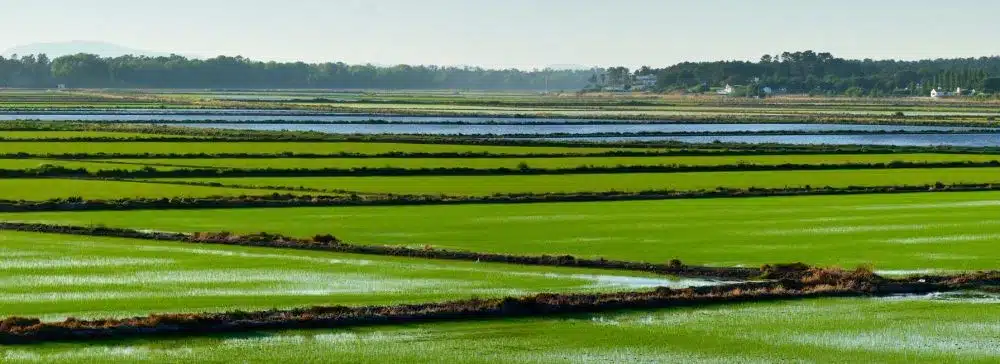
In the North of Portugal, CeNTI’s Bio-Silica Living Lab began with an ambitious idea: producing bio-silica from rice husk ash. While scientifically promising, this initial approach faced an important limitation. The rice husk was not a local resource, meaning the value chain could not easily be rooted in the territory. Instead of building a Shared Agenda around a resource that was not truly regional, the focus shifted. The team decided to start again from the territory itself, its resources, its challenges, and its opportunities.
This change of perspective was crucial. Shared Agendas are not meant to adapt territories to pre-defined technologies, but rather to design solutions that emerge from local realities. The project listened to stakeholders and examined the Northwest region, evolving from a purely technological vision into one that is grounded in place-based challenges and opportunities.
To address the region’s challenges, the Shared Agenda covered 35 municipalities across Northwest Portugal. This area combines the urban and industrial strength of Porto with rural zones rich in forestry, agriculture, and fisheries, creating a territory where tradition and innovation can come together. The territory achieved three key objectives: aligning with existing stakeholder networks, accessing diverse biomass sources (forestry, marine, and agro-industrial residues), and strengthening integration with national smart strategies and regional bioeconomy priorities.
An interactive Shared Agenda workshop was organized by CeNTI, AKIS, NAKED, and BioHubCat, with CeNTI coordinating. 18 entities, including raw material providers, end-users, and researchers from agriculture, marine, and forestry sectors, used an adapted pentagonal map approach to collaboratively explore sustainable solutions. The group identified regional and global trends, pinpointed challenges in waste valorization, and highlighted promising solutions for further development.
This collaborative effort was not a one-off event. Partners plan to maintain regular check-ins and feedback sessions to ensure the Shared Agenda genuinely reflects stakeholder needs and insights. Overall, the workshops and consultations emphasized a clear message: waste should be seen not as a problem, but as a valuable resource capable of driving a sustainable, circular economy.
Looking to the future, the Shared Agenda envisions that by 2040 the Northwest of Portugal will become a reference hub for circular bioeconomy. To guide this vision, a strategic statement wasdefined to reflect regional priorities and approaches:
The Northwest of Portugal will have a management entity for an efficient and sustainable use of agri-food, marine and forestry waste, transforming it into an essential resource for the economic, social, and environmental development of the national territory. Collaborative platforms will drive efficiency in collection, distribution, and management of waste and by-product streams, with an added emphasis on the involvement of public entities. Regional strategies will promote industrial symbioses, collaboration networks, and advanced digitalization for optimized stock management and intelligent distribution, facilitating circular and replicable bio-based value chains.
Hence, collaboration will be the backbone of this transition. Industrial symbiosis and digital platforms will optimise resource flows, while companies, local communities, and public institutions will work together to ensure that waste and by-products are fully integrated into the economy. The ultimate goal is not only economic competitiveness, but also environmental regeneration and social well-being.
Building momentum
This Shared Agenda marks an important step for the region. It sets the direction for concrete actions: developing new circular business models, strengthening the role of primary producers in the value chains, and mobilising stakeholders and investment to create jobs and opportunities. To ensure the platform’s effective implementation, CeNTI will soon initiate dialogue with key stakeholders and authorities to discuss how best to move forward. With this proactive engagement, the Northwest of Portugal is ready to lead by example in the European transition towards a circular bioeconomy.