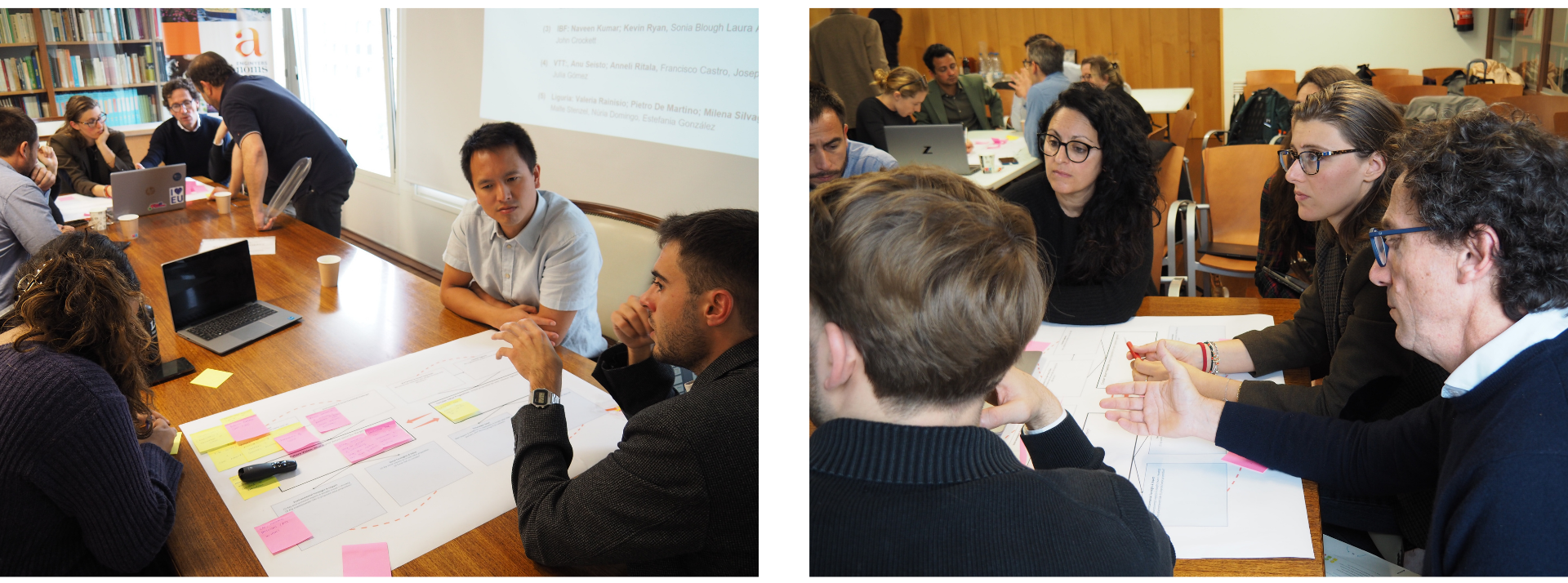
The Lleida territory, where the PRIMED Living Lab 1 (LLAB1) operates, is showing how Shared Agendas can evolve from strategic frameworks into concrete, place-based transformation processes.
PRIMED actors such as Alcarràs Bioproductors, AKIS, and BioHubCat, alongside collaborators like Naked and Inveniam, have been involved in both governance and implementation. Their role has been instrumental in accompanying the Agenda as well as in testing how collaborative governance can effectively deliver real change.
What distinguishes Lleida is its commitment to continuous experimentation. Rather than applying a rigid model, the Shared Agenda operates as a living system, where governance mechanisms and project development processes are constantly refined through practice.

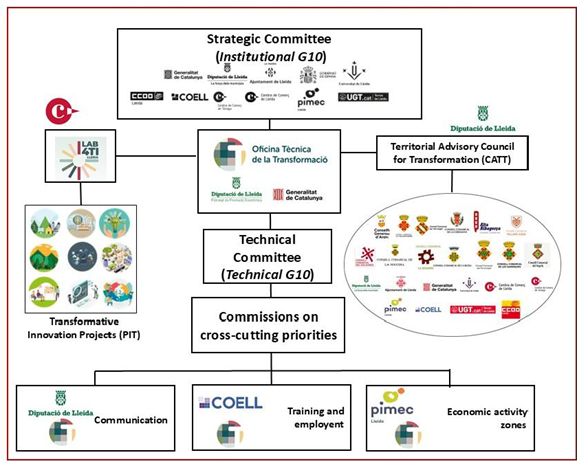
A key achievement during this phase has been the consolidation and operationalisation of a structured governance model to support the implementation of the Shared Agenda. Central to this model is the G10 framework, a governance structure that comprises ten key public and private organisations committed to driving the territory’s long-term transformation. The G10 acts as a permanent space for coordination and decision-making, helping align priorities, resources and actions across institutions and sectors. Formalised through a 4-year collaboration agreement, this framework provides both strategic direction and day-to-day coordination.
Its dual structure balances strategy and execution:
- The Institutional G10 convenes as needed to endorse key strategic decisions and maintain high-level alignment.
- The Technical G10 meets on a regular basis (every two months) to coordinate activities, monitor progress and support implementation across initiatives.
This arrangement creates a stable and predictable governance environment, grounded in trust, shared responsibility and long-term territorial commitment.
Building on this foundation, two cross-cutting commissions have also been strengthened to translate strategic priorities into concrete actions:
- The Training and Employment Commission focuses on aligning skills development, talent attraction and employment policies with the region’s future economic needs. Its actions include the development of local guidance systems, tailored training programmes and initiatives to attract and retain young talent.
- The Economic Activity Zones Commission (PAEs) works to enhance the competitiveness and sustainability of industrial areas. Key actions include assessing the readiness of industrial zones, promoting local industrial associations, and advancing energy efficiency and circular economy initiatives.
Both commissions have successfully developed and validated their action plans for 2025, a clear transition from strategic planning to implementation.
The governance architecture is further reinforced by the Territorial Advisory Council for Transformation (CATT), a broader multi-level and multi-actor body that ensures territorial coherence and policy alignment. It brings together local authorities, public agencies, sectoral experts and regional government representatives and facilitates coordination across administrative levels and aligns initiatives with overarching strategies such as RIS3CAT 2030.
Beyond its advisory role, the CATT acts as a key platform for reviewing and validating action plans, strengthening coordination, and building legitimacy across stakeholders. Its contribution in 2025, endorsing key plans and providing strategic recommendations, has reinforced its role as a central pillar of the governance model.
To translate governance into concrete territorial action, the Shared Agenda is also developing a network of innovation spaces known as HubLabs. These hubs are designed to connect local challenges with experimentation, entrepreneurship and collaborative project development. Beyond physical spaces, they provide dedicated teams, technical support and coordination mechanisms to help transform ideas into scalable initiatives with territorial impact.
Three agreements have been signed between the Lleida Provincial Council and the municipalities of Alcarràs, Balaguer and Lleida to host the HubLabs, each with dedicated personnel to implement supporting actions to entrepreneurs:
- The BioHubLab (Alcarràs) focuses on circular bioeconomy and livestock bioproducts. Alcarràs Bioproductors and the BioHubCat have a key role in defining and running the support programs.
- The EnergyHubLab (Balaguer) centers on renewable energy ecosystems and energy communities.
- The AgroLivingLab (Lleida) works on agri-food value chain modernisation and digital farming (this continues the work from a previous project led by the Lleida City Council).
These labs serve as territorial innovation cells, a concept promoted by the Ministry for Ecological Transition and the Demographic Challenge to describe local experimentation spaces where public institutions, businesses, researchers and citizens collaborate to design and test responses to territorial challenges. The initiative is also supported through an agreement with the Provincial Council. In practice, the HubLabs help test, scale and connect transformative projects across the region, linking local capacities with shared social, environmental and economic challenges.
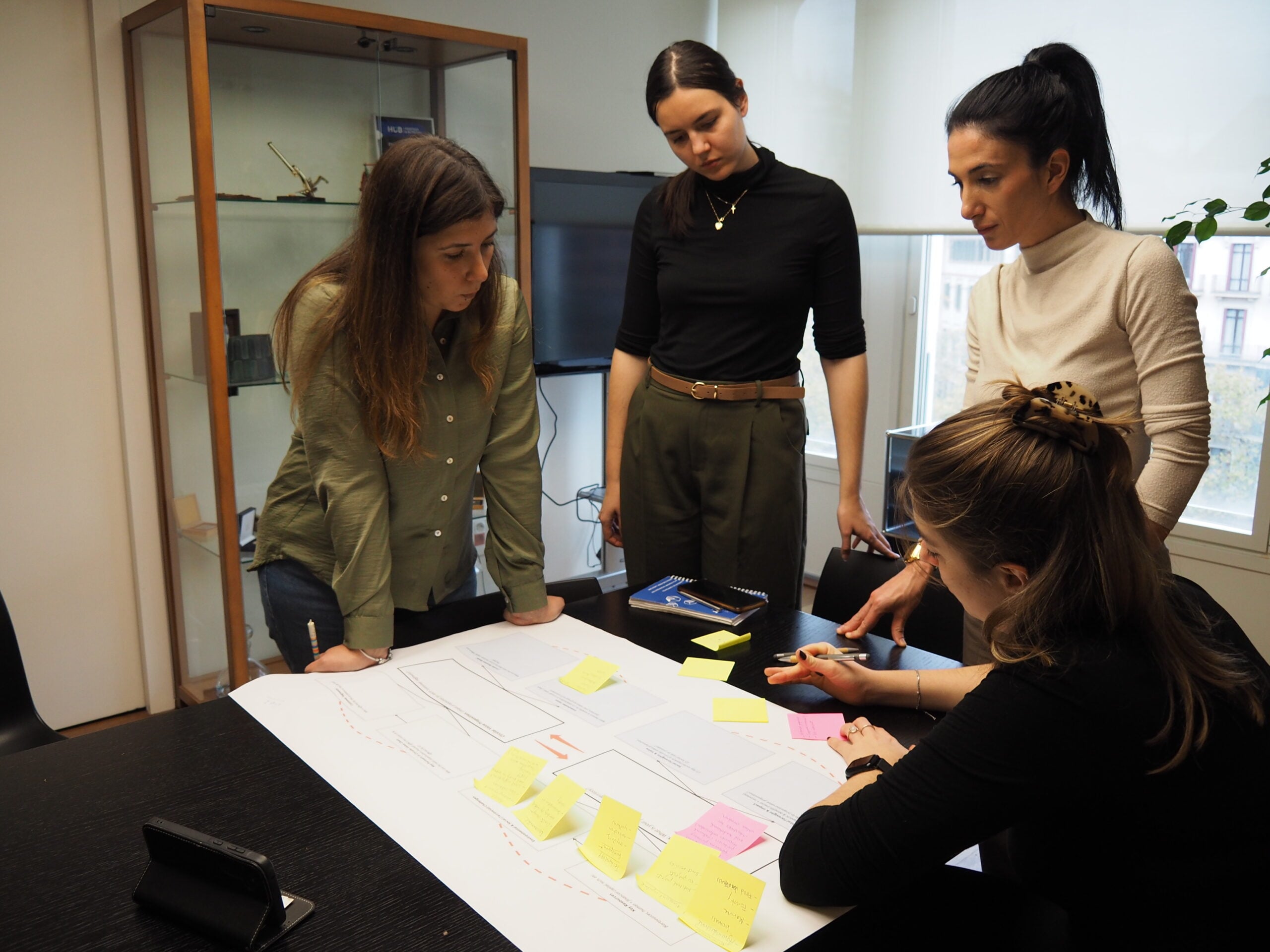
One of the most significant shifts in the Lleida Shared Agenda has been the move from strategy to implementation through the definition of a portfolio of Transformative Innovation Projects (TIPs).
Rather than isolated initiatives, TIPs are designed as systemic, integrated interventions. Each project addresses a key territorial challenge while creating the conditions for broader transformation in sectors such as bioeconomy, energy, digitalization, and workforce development. They are co-designed with public institutions, private actors and technical experts, ensuring both relevance and feasibility.
A total of 9 TIPs have been identified:
- Bioindustrial Parks (TIP1) aim to create a network of circular, innovation-driven industrial hubs that valorize local biomass and waste streams. This initiative has already gained regional traction, being incorporated into the Catalan Government Plan (2024–2027).
- Bioindustries for decarbonizing the petrochemical sector (TIP2) focuses on replacing fossil-based inputs with bio-based alternatives, supporting the transition toward greener industrial processes.
- Biotechnology use cases (TIP3) are building an enabling environment for biotech startups and SMEs, including testing, scaling and regulatory support.
- Monetization of ecosystem services: Forest climate credits to boost investment in Nature-Based Solutions (TIP4) introduce mechanisms to monetize ecosystem services, enabling investment in nature-based solutions and reinforcing sustainable land management.
- Use case to promote NB-IoT space technologies (TIP5) aim to transform Lleida into a large-scale rural living lab for connectivity solutions, particularly in agriculture and infrastructure management.
- EnergyHubCat: Integrated platform for a just energy transition (TIP6) seeks to coordinate the territory’s energy transition through a shared platform connecting energy communities, infrastructures and public actors.
- Green Economy Training Centre (TIP7) is designed as a distributed, flexible system for vocational and continuous training, aligned with emerging skills needs and potentially transformative at the Catalan level.
- Factory of Factories: Pilot Centre for Industry 4.0 Technologies (TIP8) envisions a pilot center for Industry 4.0 technologies, supporting SMEs in testing and adopting advanced manufacturing solutions.
- Observatory of Endogenous Resources (TIP9) aims to provide a data-driven foundation for decision-making, integrating information on natural resources, energy potential and human capital.
What makes these TIPs particularly distinctive is their role as anchors for broader transformation. They are not standalone projects, but platforms that mobilize investment, attract talent and connect multiple stakeholders around shared objectives.
Aligning Investment with Transformation: The Role of LAB4TI
A critical innovation in the Lleida model is the integration of investment into the design phase of projects. This is achieved through LAB4TI (Lleida Advisory Board for Transformative Investments).
LAB4TI brings together project developers, policymakers, regulators and investors from the outset. This approach ensures that projects are financially viable and scalable and helps overcome one of the most common barriers in regional development: the disconnect between project design and funding. The result is greater trust, lower risk and faster implementation.