
PRIMED develops a platform to record, verify and certify key stages in the Alcarràs bioeconomy value chain
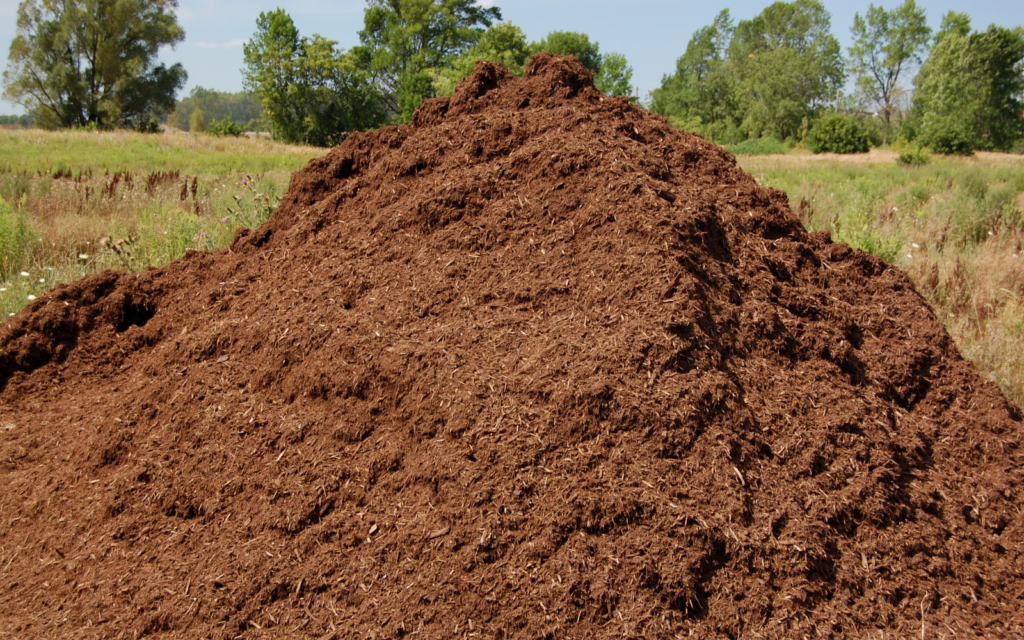
Compost made from livestock manure and crop waste is one of the most complete organic fertilizers a farm can produce. It recycles nutrients, returns organic matter to the soil and reduces reliance on mineral fertilizers. But that value rests on trust, which is hard to establish without a verifiable record of where the raw materials came from and how the compost was produced. EU rules are now opening the market for recycled and organic fertilizers such as compost to compete with mineral ones, but only for products that can demonstrate they meet defined quality and safety requirements [1].
In Alcarràs, in northeastern Spain, a pilot project has shown how digital tools can bring greater transparency, control and trust to one of the most traditional areas of the circular bioeconomy: the transformation of livestock manure and agricultural by-products into compost.
The pilot focused on the composting process at Alcarràs Bioproductors, where organic materials from farms are collected, processed and converted into a valuable organic fertilizer. The objective was to design and test a digital traceability system capable of following these materials throughout the value chain, from their origin at farm level to the final verified compost product.
The traceability challenge
Compost quality depends not only on the biological process itself, but also on the ability to verify where raw materials come from, how they are handled and under which conditions they are transformed. However, many current traceability systems still rely on fragmented records, spreadsheets and manual procedures managed by different actors. This makes it difficult to integrate information, verify data and audit the full process.
Mapping the process
To address this challenge, the project team first analyzed the real operational workflow of the composting plant. This included the generation and collection of raw materials at farm level, transport to the facility, reception and weighing, formation and management of composting piles or trenches, maturation, final lot creation and laboratory verification.
This analysis led to the definition of a structured set of Recording Points: the critical moments where traceability information needs to be captured. These points provide a common framework to connect the origin of raw materials, composting operations and final compost verification.
Digital Platform & Traceability Tool
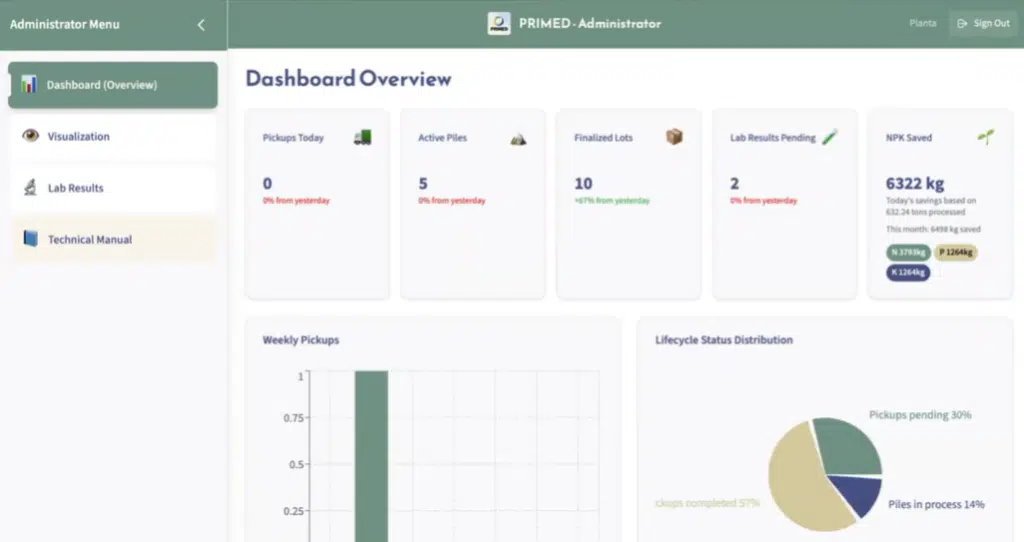
Based on this framework, the team developed a first version of the digital platform, combining a mobile application with a web-based dashboard. The mobile app was designed around three user profiles: transport operator, plant operator and farmer.
- The transport operator can register collection events at the farm, scan QR codes, record material origin, validate quantities, capture geolocation and timestamps, register delivery weights and upload photographic evidence.
- The plant operator can identify piles or trenches, register their composition, manage active composting processes, select piles in post-maturation, create compost lots and record the status of samples linked to laboratory analysis.
- The farmer profile provides greater transparency to primary producers, allowing them to view material removals from their farms in near real time and access verified traceability information.
The system was designed to work under real field and plant conditions while keeping the workflow simple and structured for users. By integrating QR identification, geolocation, weight registration, timestamps and photographic evidence, the platform helps reduce manual errors, improve data consistency and strengthen verification across the value chain.
Blockchain certification where it adds the most value
Alongside the digital traceability system, the pilot also defined a blockchain certification strategy. Rather than registering every operational activity on blockchain, the approach focuses on the stages where immutability, transparency and auditability provide the greatest added value.
Certification is applied to three key stages: the collection, transport and validation of manure at the composting plant; the formation and management of composting piles or trenches; and the creation of the final compost lot, including laboratory analysis and final verification.
This selective approach reduces the number of blockchain transactions while preserving the integrity of the traceability process. It ensures that the most critical events remain independently verifiable, without adding unnecessary complexity to daily operations.
A replicable model for the bioeconomy
Beyond improving process control, the pilot strengthens the circular bioeconomy by supporting the transformation of livestock manure and agricultural by-products into a certified organic fertilizer. With better transparency and verification, compost can gain greater recognition as a sustainable alternative to mineral fertilizers and as a key tool for nutrient recycling.
The result is a fully functional prototype that demonstrates the feasibility of an integrated, transparent and blockchain-certifiable bioeconomy value chain. By linking raw material origin, composting operations and final compost lot verification, the platform helps build trust among all actors involved.
The Alcarràs pilot also provides a replicable framework for other bioeconomy value chains facing similar challenges around traceability, certification and digital transformation. It shows that, when applied strategically, digitalization and blockchain can support more reliable, transparent and sustainable circular systems.
The webinar
If you want a fuller picture of the project, the team presented it in a webinar that you can watch below.
[1] Regulation (EU) 2019/1009 on EU fertilising products, Articles 4 and 5 and Annex I. https://eur-lex.europa.eu/eli/reg/2019/1009